.png)


Anyone who’s served in the U.S. military alongside partner forces from allied nations know the reality: It is functionally impossible to coordinate and collaborate with allied forces using traditional systems the Pentagon deploys.
At best, we have a shared radio encryption that never really works or different color-coded computers on base. A red computer for US systems that allows you to email certain countries, a yellow computer for other US systems that lets you email some US agencies and some other countries, a pink one that lets you email a different set of countries but not most US users and so on. Maybe doing business this way made sense in the 1990s, but consumer technology has come a long way since then — military technology, by and large, has not.
And that’s just on base. In the field? Hopefully our warfighters have their allies on WhatsApp.
Sharing data securely with partner forces in a tactical environment should not be a functional nonstarter for American warfighters. In INDOPACOM, a U.S. Special Forces soldier should be able to securely and easily communicate with a South Korean soldier without a special device, swivel chairing to a different system, or color-coded computers. In Europe, digital coordination by allied forces fighting Russians on the battlefield shouldn’t be blocked by archaic technologies.
So we’ve designed the Adyton Operations Kit (AOK) to do just that.
The “cryptographic commons”
AOK uses self‑sovereign identifiers anchored in each device’s hardware root‑of‑trust and reinforced by the integrated mobile SDK, and our biometric protection of device-bound cryptographic DID/VC/ZKP material enables auditable data trails and secure cryptographic-based collaboration which enable collaboration in multi-domain, joint and partner force environments.
Get all that?
There’s a lot of technical firepower under the hood to enable something relatively simple.
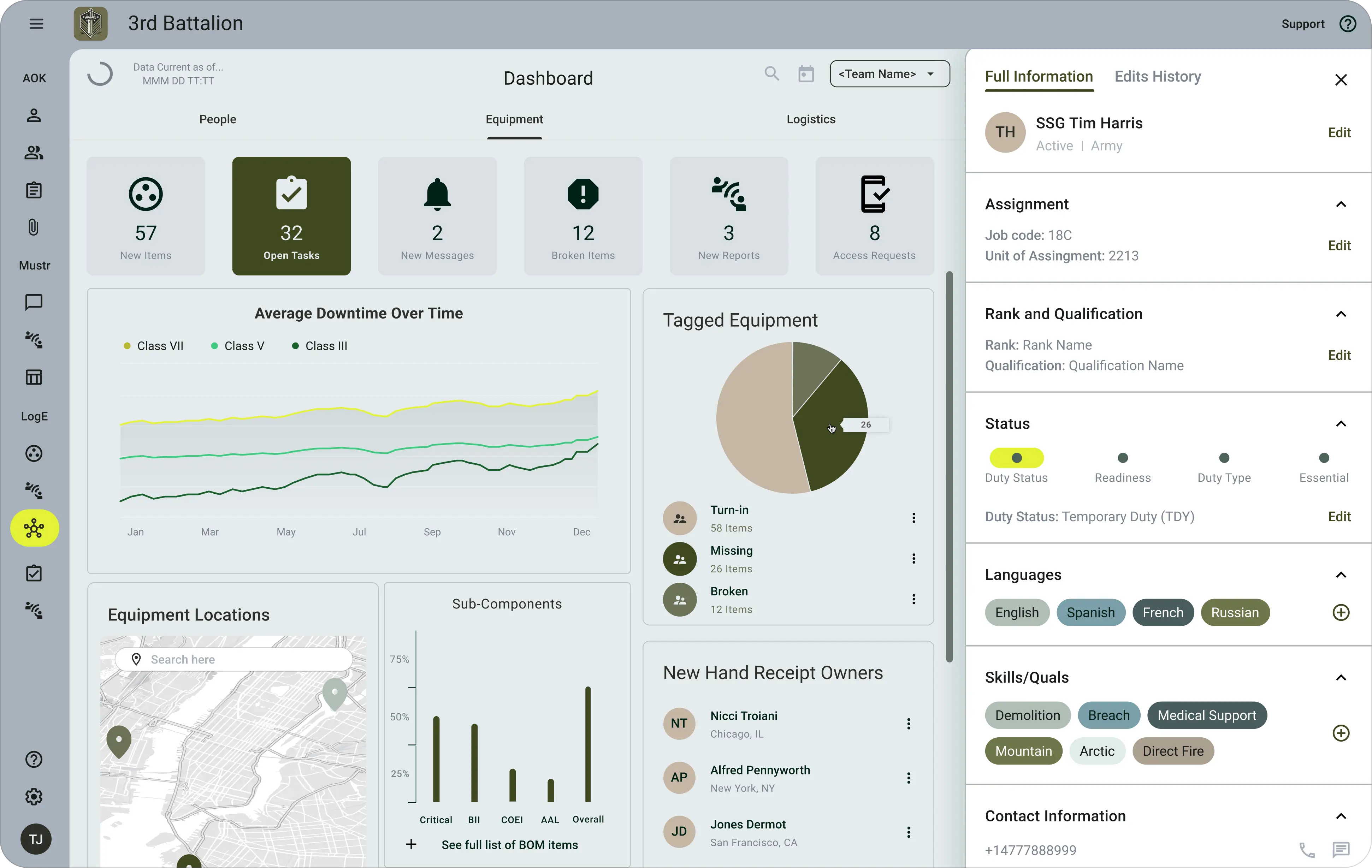
Two strangers — a U.S. Special Forces operator and a South Korean member of the Flying Tiger 3rd Special Forces Brigade — can both securely use AOK on their phones to “meet” digitally at the edge. They can exchange messages, they can securely use the same permission-based dataset to assess materiel availability, they can both integrate with early warning UAS-incursion systems. It looks like this:
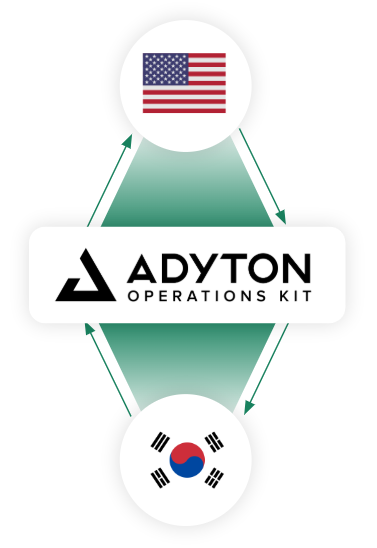
AOK enables users to exchange peer-verified, cryptographic credentials, which is a fancy way of saying the technology verifies the users are who they say they are, and makes sure they both have the appropriate permissions to share the information they want to share. AOK is a common digital space that any validated coalition partner can plug into on their personal or government-issued device. It’s like using your phone to pay for something — neither you nor the merchant care whether you’re using Visa, AmEx, or Apple Pay, you both just want to pay and receive money, respectively.
And when all partner and coalition forces participate in the digital commons AOK creates, every warfighter sharing in the mission has access to as much field-based, real-time ground truth information about personnel, materiel, and readiness as their security entitlement allows. Information is restricted based on permissioning, not based on the radio the soldier is carrying.
Technically, the Adyton Operations Kit is the foundation for collaborative data across people, organizations, and autonomous systems. Practically, it means information isn’t bound by organization structures or hardware — it means American forces and our allies can collaborate seamlessly on the battlefield to achieve their mission.
Perhaps most importantly, it means the end of color-coded computers.